I used to think inspiration was something you either had or didn't. Twenty-one years into this career, I know better. Inspiration isn't a switch — it's a tide. It comes in, it goes out, and no amount of willing it back will make it arrive on my schedule. I have learned to work with it, and not against it.
The hardest lesson has been this: the longer I stay away from the easel, the harder it is to return. It's tempting, on a low day, to think I'll wait until I feel it again. But that feeling doesn't build in the absence of work. It builds in the presence of small, low-stakes contact with the work. A break that starts as a rest can quietly turn into avoidance, and avoidance is what makes the return feel impossible.
So these days, I don't wait for inspiration to knock. I keep the door open a crack, even on the days I don't feel like answering it.
Somewhere along the way, I stopped treating "creative time" and "everything else" as separate categories. Gardening, cooking, even just talking with people I love — I used to think of these as breaks from my creative life. Now I recognize them as part of it.
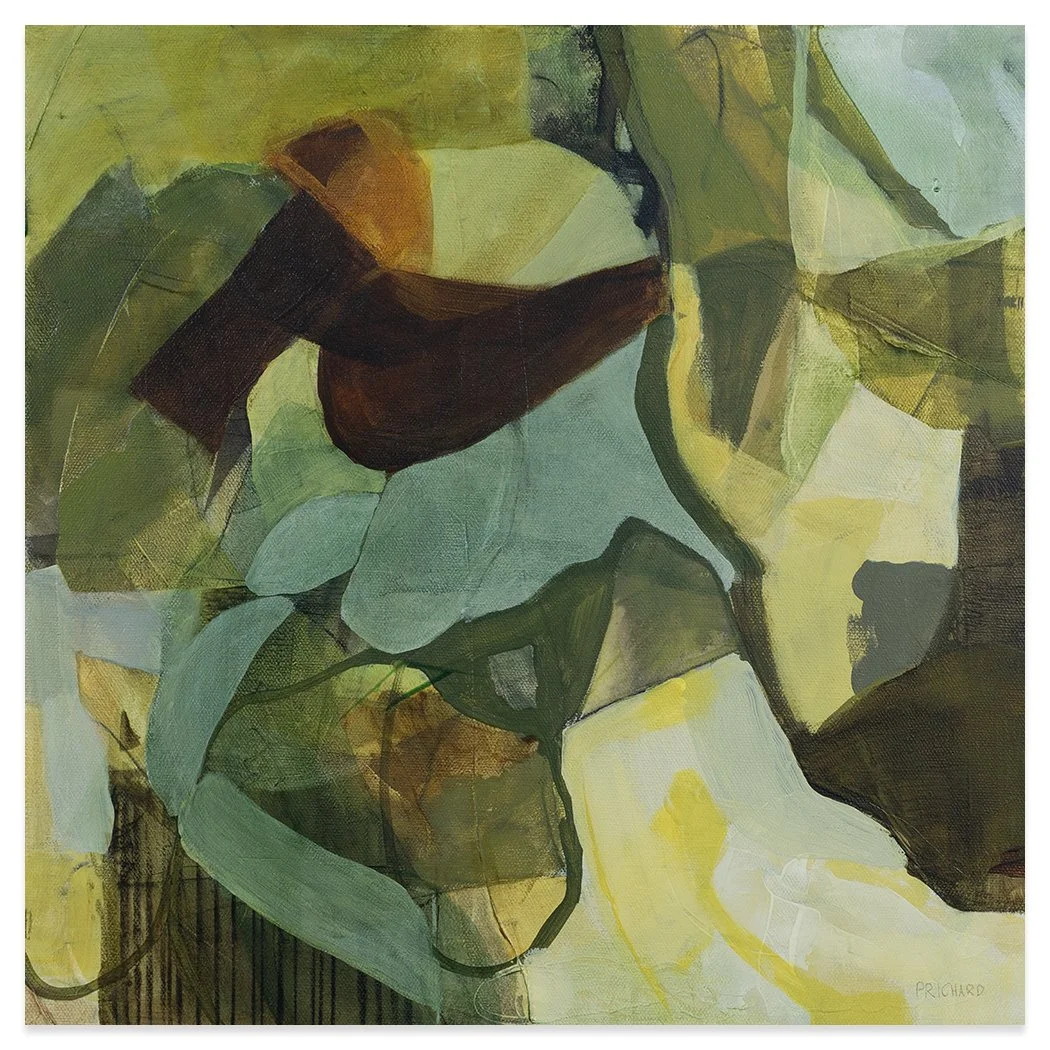
“Heliodor”, a 16×16” painting..for when I couldn’t process making a larger piece. Tap the photo for more info.
There's a kind of problem-solving in figuring out what to whip up for dinner. There's composition happening when I'm deciding what to plant where, or how to arrange collectables while dusting, how colors and heights will sit next to each other. There's improvisation in a good conversation — following a thread you didn't expect, a movie, a book…adjusting in real time. None of that is separate from what happens on canvas. It's the same muscle, just moving through a different day. This shift mattered more than any technique I've picked up. It means that on the days I'm not painting, I'm not "not creating." I'm just creating somewhere else for a while.
When inspiration does start to return, I've learned not to trust it with too much too soon. If I go straight for a full painting, I can talk myself into a corner — a piece I'm not ready for, built on energy that's still finding its feet. That's a fast way to turn a fragile spark into a discouraging mess.
Instead, I make small demos. Low-pressure, low-stakes, nothing riding on them. I make 5×7’s on paper. They're not about the outcome — they're about reintroducing my hand to the process without asking it to perform. More often than not, the demo is what leads me back into real work. It's the bridge, not the destination.
If I could tell “beginning Julie” one thing, it's that not feeling inspired was never the problem I thought it was. The problem was believing it meant something was wrong — with my work, my discipline, or my creativity itself. It didn't. It just meant I was between tides.
These days, I don't panic in the low periods. I water the yard, I cook something new, I talk to the people around me, and I make small, forgiving works that let me ease back in. The painting always comes back. It just doesn't come back on command — and after two decades, I've made peace with that.